
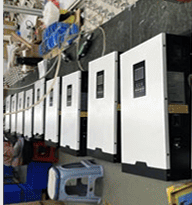
If you’re looking for an inverter, chances are you’ve already seen a lot of Chinese brands. They’re quite common these days, especially when people are looking for something that does the job without putting a huge dent in their budget.
But there’s always that question in the back of your mind: is it actually worth buying?
Well, it can be.
The problem is that not every inverter is made the same. Some Chinese manufacturers make solid products that can work for years, while some cheaper models may give you trouble sooner than you’d expect. So, instead of simply looking at the price tag, there are a few things you should check first.
Why Do People Buy Chinese Inverters?
The biggest reason is usually the price.
Compared with many expensive international brands, Chinese models are often easier on the wallet. This makes them attractive for homes, small businesses, shops, and people setting up solar systems on a budget.
There’s also a lot of choice. You can find small units for basic backup power, larger models for homes, and hybrid systems that can work with solar panels, batteries, and the electricity grid.
Some models even come with mobile apps, digital screens, battery monitoring, and different charging options.
So, you’re not necessarily getting a basic product just because it’s affordable.
Does Made in China Mean Poor Quality?
Not really.
This is a common assumption, but it’s not that simple. China has one of the biggest electronics manufacturing industries in the world. Plenty of good quality electronic products are manufactured there.
The real question is who made the inverter and how well it was built.
A reputable manufacturer will normally pay more attention to components, testing, safety features, and quality control. An unknown company selling an extremely cheap inverter may not offer the same level of reliability.
That’s why the brand matters more than the country printed on the box.
How Reliable Is a Chinese Inverter?
It depends on the model.
Some can run reliably for a long time when they’re correctly installed and used within their limits. Others may have issues with fans, displays, batteries, overheating, or internal components.
Before buying, spend a little time checking what other users are saying. Don’t just read one or two reviews either. Look for common complaints and see whether people have been able to get repairs or replacement parts.
Warranty support is also important.
Imagine your inverter stops working after a year and there’s nobody nearby who can repair it. Suddenly, the money you saved at the beginning doesn’t look like such a great deal.
Common Types You Can Find
There isn’t just one type of inverter. The right option depends on what you actually need.
Off Grid Inverters
These are useful in places where grid electricity isn’t available or isn’t reliable.
They normally work with batteries and provide electricity to appliances when the main power supply isn’t available. They’re often used in homes, shops, farms, and remote areas.
Hybrid Inverters
Hybrid models are becoming more popular because they’re flexible.
Depending on the model, they can work with solar panels, batteries, and grid electricity. This makes them a practical choice for people who want to use solar power but still have the grid available as another source.
On Grid Inverters
These are mainly used with solar panel systems connected to the electricity grid.
They convert the electricity produced by the panels so it can be used by your home or business. However, a standard on grid system usually won’t keep your appliances running during a power outage unless the setup has additional backup equipment.
What Should You Look At Before Buying?
Don’t buy an inverter just because someone says it’s powerful or cheap.
Start with the power rating. Think about what you actually want to run. Maybe it’s a few fans and lights, or perhaps you also want to use a refrigerator, television, computers, or other appliances.
Remember that some appliances need more power when they first start. A refrigerator, for example, can briefly require more power than it uses during normal operation.
Battery compatibility is another thing people sometimes overlook. Check what battery voltage and battery type the inverter supports before making a purchase.
It’s also a good idea to look for protection features such as overload protection, short circuit protection, overheating protection, and low battery protection.
And yes, check the warranty.
What About Solar Use?
If you’re planning to use solar panels, choosing the right inverter becomes even more important.
The inverter needs to match your solar setup and power requirements. You also need to think about your battery capacity if you’re planning to store electricity for later use.
A cheap inverter may look like a good deal at first, but if it isn’t suitable for your solar system, you could end up wasting money.
If you’re not sure about the correct size, talk to a qualified installer. It’s much better to get the system sized properly than to find out later that the inverter can’t handle your needs.
Final Thoughts
A Chinese inverter can be a perfectly reasonable choice, especially if you’re working with a limited budget.
Just don’t make your decision based on price alone.
Check the brand, warranty, specifications, reviews, and availability of local support. Think about how much power you actually need and what appliances you’ll be running.
A little research before buying can save you a lot of frustration later. After all, the whole point of an inverter is to make your power situation easier, not give you another problem to deal with.